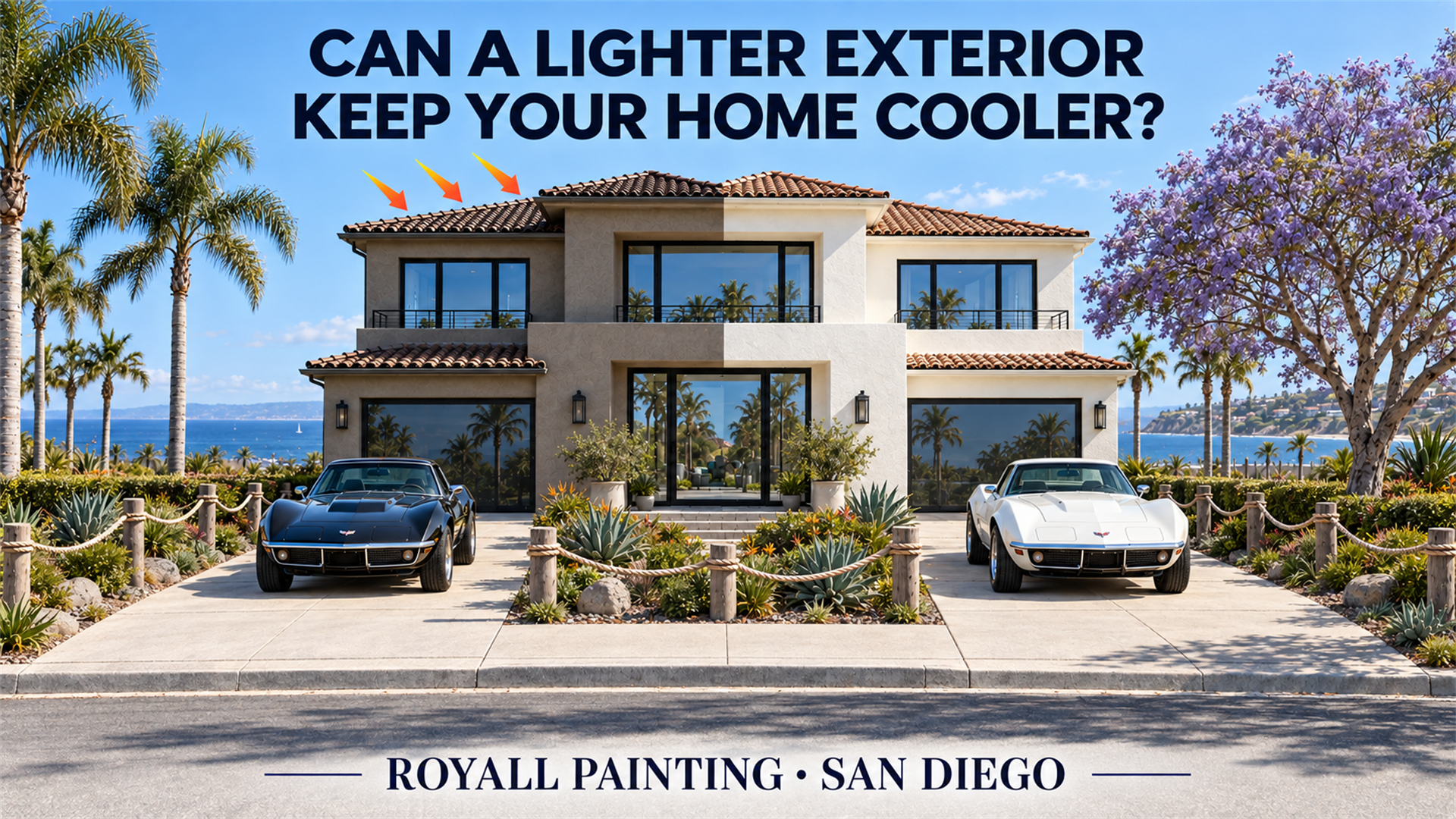
Start with the black-car test.
If you have ever opened a black car after it sat in the sun, you already understand the basic idea. Dark surfaces usually absorb more of the sunlight that strikes them. Lighter surfaces usually reflect more of it.
Exterior walls work on the same principle, although a house is more complicated than a car. Wall direction, shade, insulation, windows, air leakage, the heating and cooling system, and the coating itself all affect what happens indoors.
What makes an exterior wall “cool”?
A cool wall is designed to stay cooler in sunlight by reflecting a larger share of solar energy and releasing absorbed heat efficiently. The two useful product measurements are solar reflectance and thermal emittance.
Lawrence Berkeley National Laboratory explains that raising wall solar reflectance lowers the wall's surface temperature in the sun and reduces daytime heat flow into the occupied space. That can reduce cooling demand in an air-conditioned building or improve comfort in a building without air conditioning.
What do the energy studies actually say?
The research describes modeled potential, not a guaranteed result for a particular house. The Cool Roof Rating Council summarizes California Energy Commission modeling that found cool exterior walls could reduce annual HVAC energy use in air-conditioned single-family homes by about 3% to 25%, depending on climate and building conditions.
Berkeley Lab reported that its simulations found annual HVAC energy-cost savings of up to 8.3% for single-family homes in warm U.S. cities. Those studies examined many building types and assumptions. They do not mean that painting one San Diego home white will automatically produce the top number—or any fixed bill reduction.
The honest takeaway is simpler: increasing wall reflectance can reduce solar heat gain, and the possible value is greatest where walls receive substantial sun and cooling demand is meaningful.
Why the answer changes from one San Diego home to another.
San Diego includes coastal, inland, shaded, and exposed conditions. A west-facing wall with afternoon sun is different from a north-facing wall behind mature trees. An older home with modest wall insulation responds differently from a newer, tightly insulated home.
Before choosing a color for heat performance, consider:
- which walls receive direct sun and for how many hours;
- the existing wall assembly, insulation, windows, and air sealing;
- the home's cooling equipment and normal thermostat use;
- nearby buildings, trees, overhangs, and other sources of shade;
- the coating's tested solar reflectance and thermal emittance;
- winter heating effects, even in a generally mild climate; and
- surface preparation, durability, sheen, and the way the selected color fits the property.
You do not have to make every house bright white.
Light whites, off-whites, pale grays, and other light colors are widely available and often have higher reflectance than conventional dark colors. A homeowner who prefers a deeper palette can also ask whether a manufacturer publishes solar-reflectance data or offers infrared-reflective “cool color” options.
Appearance still matters. Sample the color on the actual exterior and review it in morning, midday, and afternoon light. Compare it with the roof, trim, hardscape, landscaping, and neighboring finishes before making a final decision.
Turn the idea into a practical paint plan.
A useful exterior consultation should separate three questions: What color looks right? What coating is appropriate for the surface and exposure? What verified performance information is available for the product?
Royall Painting can help organize a lighter exterior palette, prepare test areas, and review the walls that receive the strongest sun. Energy performance depends on the entire building, so a painter should not promise an exact indoor-temperature change or utility-bill reduction.
Research behind this guide.
Considering a lighter exterior?
Share wide exterior photos and the walls that receive the strongest sun. Gabriel Royall and Royall Painting can help test a practical San Diego color palette on the actual property.
Share the project